Search for the Paris opera house and you will be shown two buildings. They belong to one company, they are twenty-five minutes apart on line 8, and they answer completely different questions. This settles which one you actually want.
The short answer
| Palais Garnier | Opéra Bastille | |
|---|---|---|
| Opened | 5 January 1875 | 13 July 1989 |
| Architect | Charles Garnier | Carlos Ott |
| Capacity | 2,101 | 2,745 |
| Mostly stages | Ballet, and some opera | Large-scale opera |
| Daytime visits | Yes, most days | Guided tours only |
| What you go for | The room you are standing in | The thing on the stage |
| Adult admission | €25 / €15 | Priced per production |
They are one company, not two
The Opéra national de Paris was founded by Louis XIV in 1669 and has been working continuously since. It has moved house more than a dozen times, and since 13 July 1989 it has run both of these buildings at once. The company page has the arrangement in full.
The case for the Palais Garnier
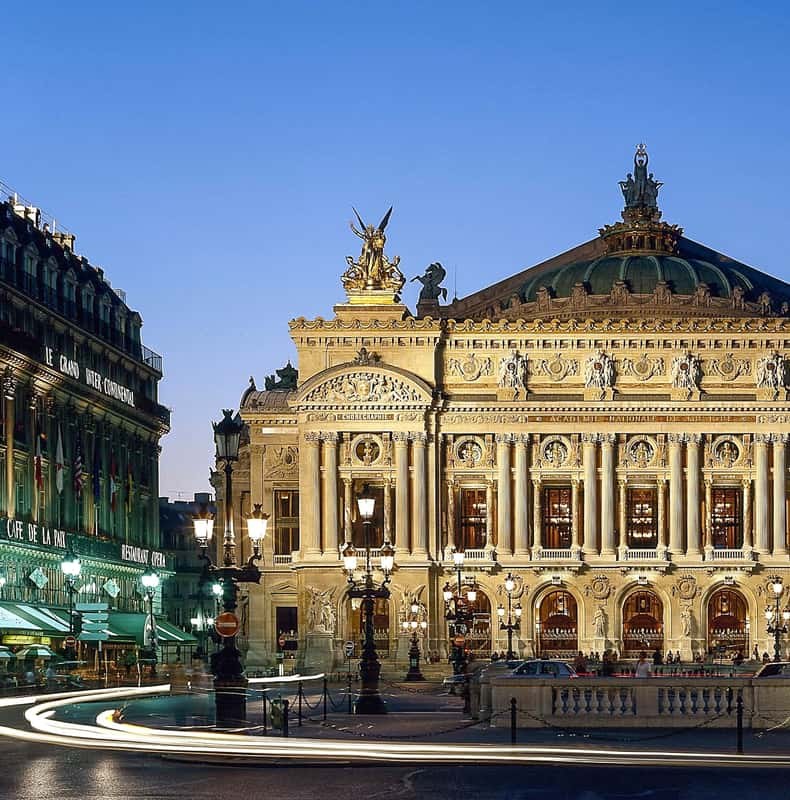
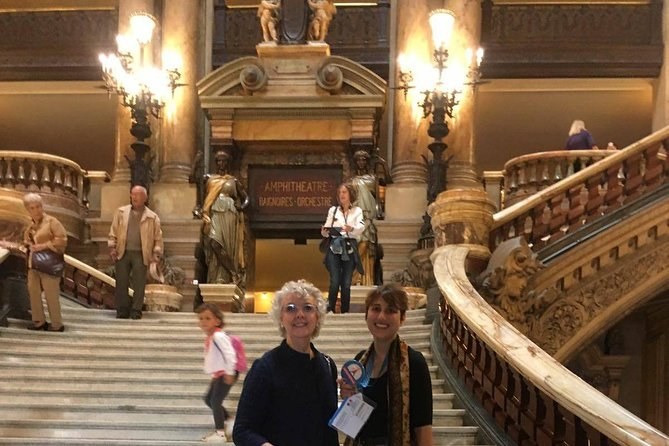
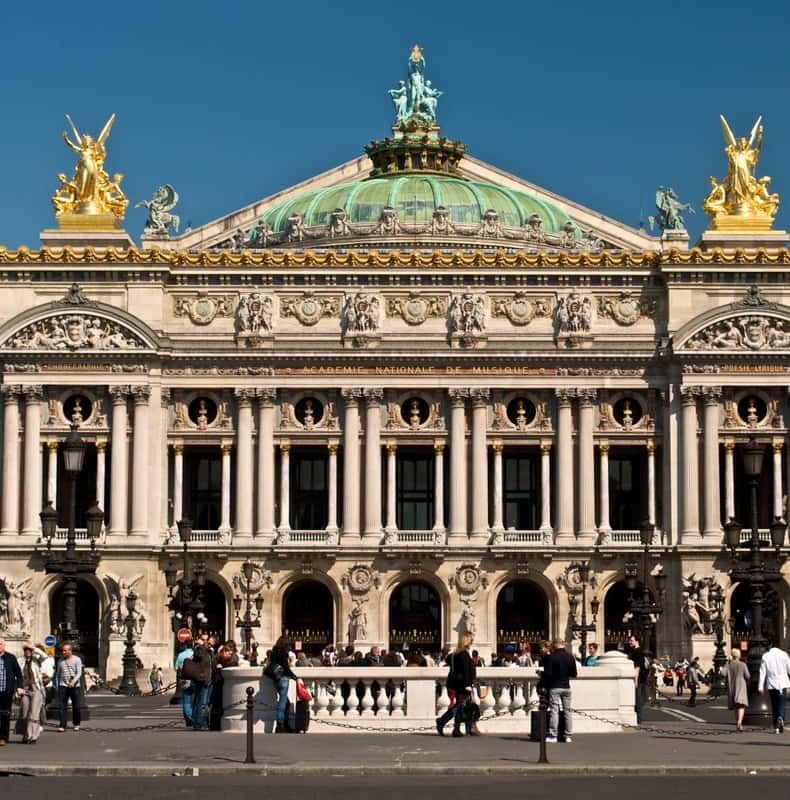
It is the building. A thirty-metre marble well of a staircase, fifty-four metres of gilded foyer, a ceiling Chagall painted over another ceiling, and a room designed so that arriving was the performance. It opens to visitors from ten most days, and about 480,000 people a year walk through it.
If you want to see rather than hear, this is not a close contest. The rooms page sets out what is behind each door.
The case for the Opéra Bastille
It is the theatre. 2,745 acoustically consistent seats, integrated scenery workshops and stage machinery built for large-scale opera, which is why most of it moved there. If what you want is a full staging of an opera you have heard of, in a room designed in the 1980s to do exactly that, this is where it is happening.
It is not a building people visit for its own sake, and its daytime access is guided tours rather than an open ticket.
Can you do both?
Yes, and it is a natural day. Visit the Garnier at ten, when it is quiet, and take a performance at the Bastille in the evening. Line 8 runs between them. What does not work is trying to see the Garnier's auditorium in the afternoon of a day when it has a daytime performance, because the building closes to visitors entirely.
Which one the ballet is at
Mostly the Garnier. When the large-scale opera moved to the Bastille the ballet stayed, which is why the company rehearsing above your head on a weekday morning is usually a dance company. That is a pleasant thing to know and the reason the auditorium door is shut.
Which one is better value
They are not comparable purchases. A Garnier visit ticket is €25, or €15 with a European address, for ninety minutes in eight rooms. A Bastille performance is priced per production and per seat and buys you an evening. The only overlapping question is what you do with a free morning, and the answer to that is the Garnier.
The one thing that catches people out
A daytime performance at the Palais Garnier closes it to visitors for the whole day. That is not the same as the auditorium being shut for a rehearsal, which is unannounced and affects one room; a daytime performance means the building does not open at all. It also shuts on 1 January, 1 May and 25 December.
Those dates are published on the Opera's own calendar of occasional closures rather than anywhere a resale platform will show you, and they are the one thing worth checking in the week before you travel. A guided departure will not run on such a day either, and you will be refunded by the operator rather than left holding a ticket — though five of the departures listed here refund nothing for a change of plan on your side. Visitor information has both rules in one place.
Getting between them
Line 8 runs from Opéra to Bastille in about fifteen minutes with no change, which makes doing both in a day genuinely easy. Walking it takes about forty-five minutes east along the Grands Boulevards and through the Marais, and it is one of the better walks in Paris if you have the afternoon.
The practical order is the Garnier first, in the morning, when it is quiet and open. An evening performance at the Bastille then has nothing to compete with.
Why the company built a second house at all
The Palais Garnier is a nineteenth-century opera house, which means a horseshoe, a lot of boxes with restricted views, and stage machinery designed for painted flats. Staging large modern productions in it is possible and awkward. The Bastille was built to solve that: 2,745 seats with consistent sightlines, integrated workshops, and stage equipment that can move a full set.
What the company kept at the Garnier is the ballet and the part of the repertoire that suits the room. That is why a weekday morning here often has a dance company rehearsing overhead, and why the auditorium is shut when it does.
What a Bastille visit is, if you want one
Not an open ticket. The Bastille opens to visitors through guided tours rather than a self-guided admission, and there is no equivalent of walking in at ten with a phone ticket. That difference alone settles the question for most people with one free morning.
It is also, frankly, a 1989 building. It is a very good theatre and it is not a reason to cross Paris unless something is on in it.
What people actually mean when they search
- "Paris opera house tickets" almost always means a Garnier visit ticket, which is what the visiting post covers.
- "Paris opera tickets" usually means a performance, which is a different purchase from the Opera's own box office.
- "Opera Garnier tour" means a guided visit, and the private tours page compares them.
What the two buildings have in common
More than the architecture suggests. Both are run by the same administration, staffed by the same company, and served by the same workshops. A costume made for a Bastille production is made by people whose predecessors made costumes for this building, and the current exhibition in the Garnier's public rooms is about exactly that work. The exhibitions page has the dates.
They also share a calendar, which is the practical part. A production at one house can pull rehearsal time into the other, and the reason a Garnier room is shut on a Tuesday morning is usually something happening across the city on a Friday night.
The verdict, by visitor
- One free morning in Paris: the Palais Garnier, at ten.
- An opera fan with an evening: the Bastille, and check what is on.
- A ballet fan: the Garnier, for both the building and the performance.
- Travelling with children: the Garnier, where under-13s go in free. The family post has the detail.
Decided on the Garnier? Paris Opera House Tours compares every way in, from the ticket alone to a private guide, with what each fare covers.